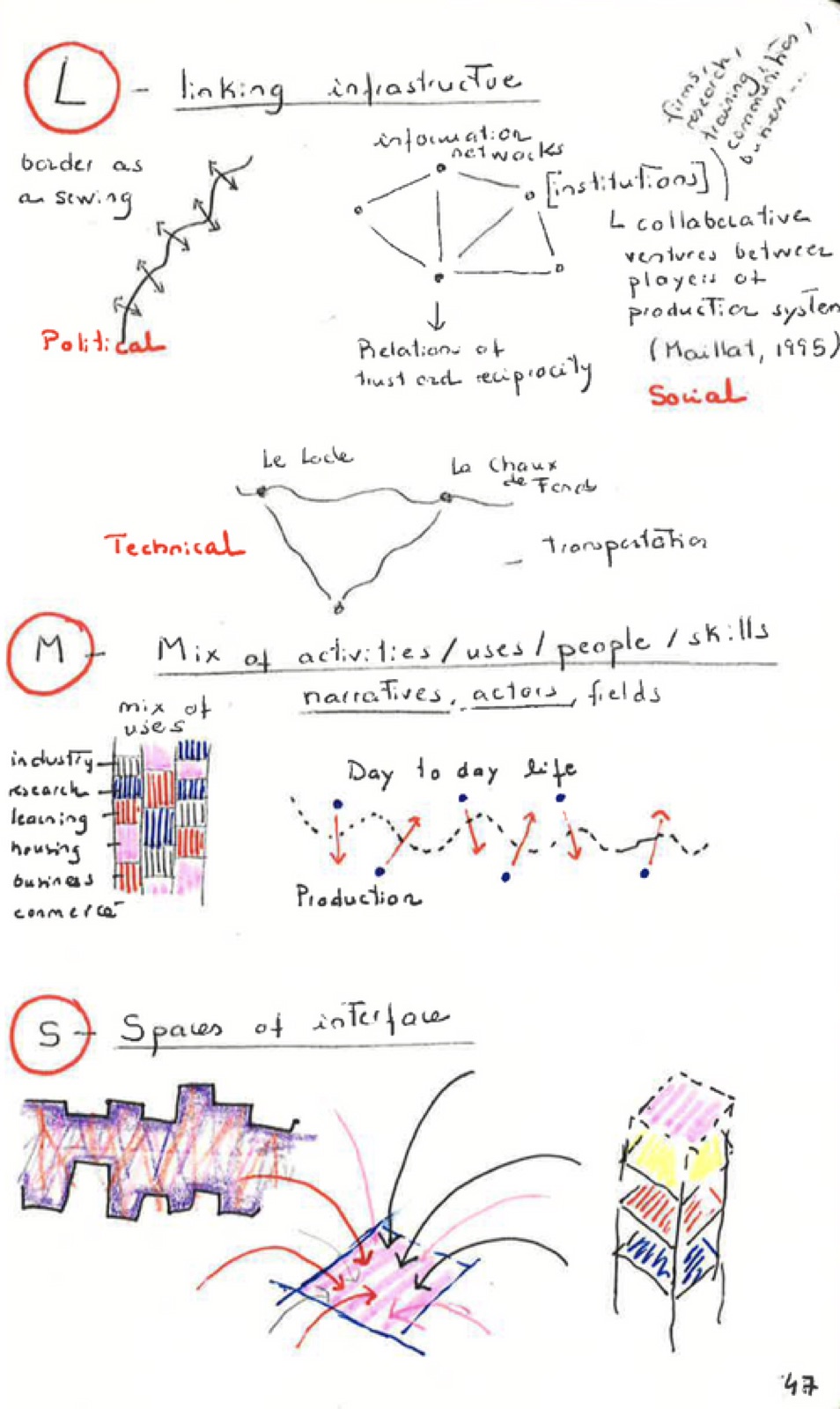
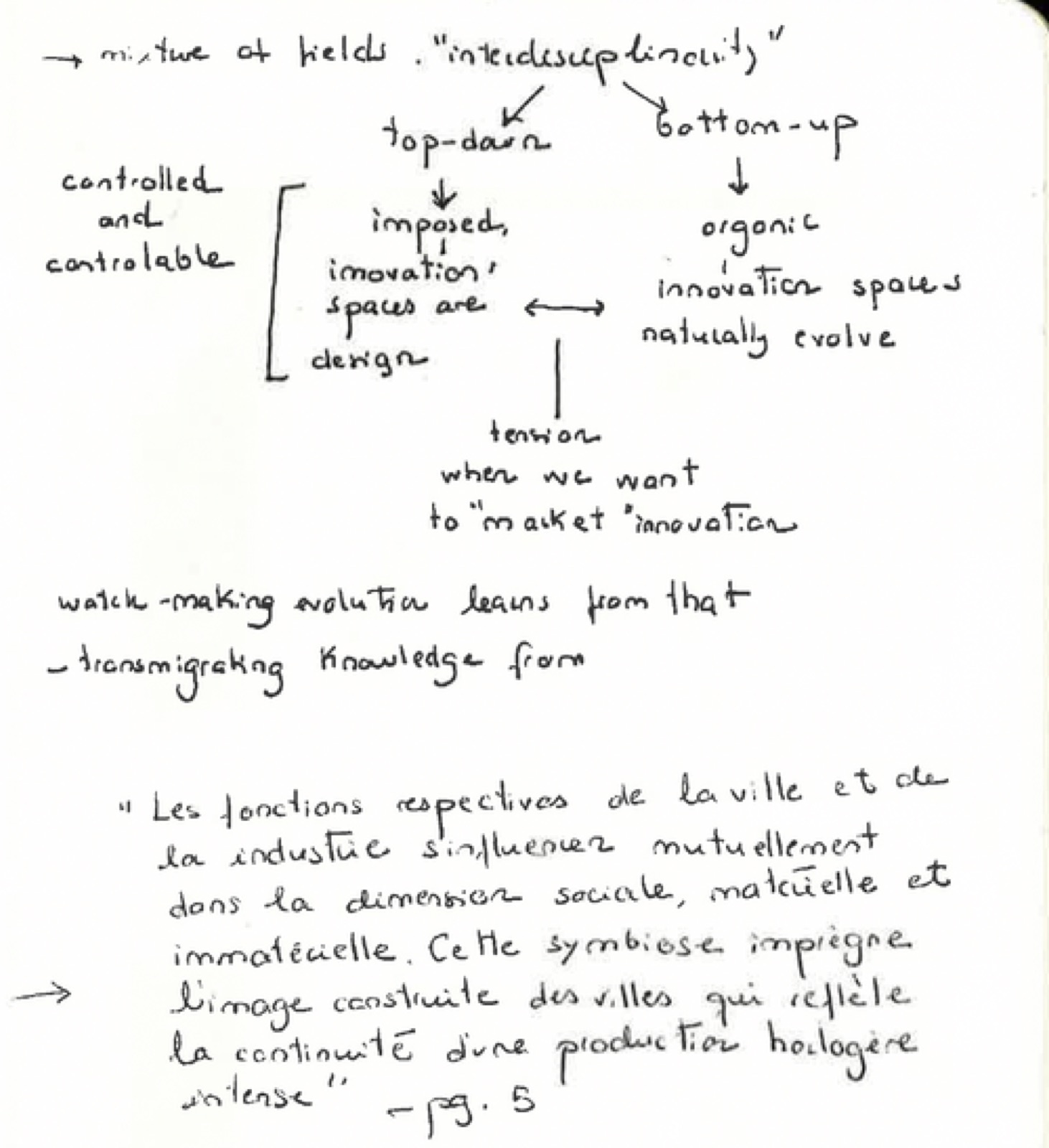
The Swiss Jura Arc has been identified as an exemplary case of a technology innovation district based on decentralized production and networked knowledge transmission. The horizontal and vertical disintegration of this Swiss system has been presented as a model that offers variety while maintaining quality and delivery times (Glasmeier, 1991). Thus, La Chaux-de-Fonds and Le Locle are an interesting case study displaying circulation of production models and transmission of technical knowledge. This aspect of the site can also be understood as part of the unique intangible heritage of this watchmaking industrial region. Therefore, understanding the key elements of this decentralized network production system can contribute to the identification of spaces of value in its industrial heritage.
Technology innovation districts are based on “collective learning and organisation processes generated particularly by innovation networks and by high institutional thickness” (Amin and Thrift, 1993 in Maillat et al., 1995). Collective learning takes place not only through explicit, articulated knowledge but also tacit knowledge. This type of knowledge exchange needs personal face-to-face interactions (Asheim et al., 2007; Crevoisier & Jeannerat, 2009; Senker, 1995) and personal relationships based on trust and reciprocity (Glasmeier, 1991; Maillat et al., 1995). In the case of the Jura Arc, close personal contact has allowed the development of collaborative projects between institutions, both public and private, which contributed to the construction of an interwoven innovation network supporting the development of the watchmaking industrial district.