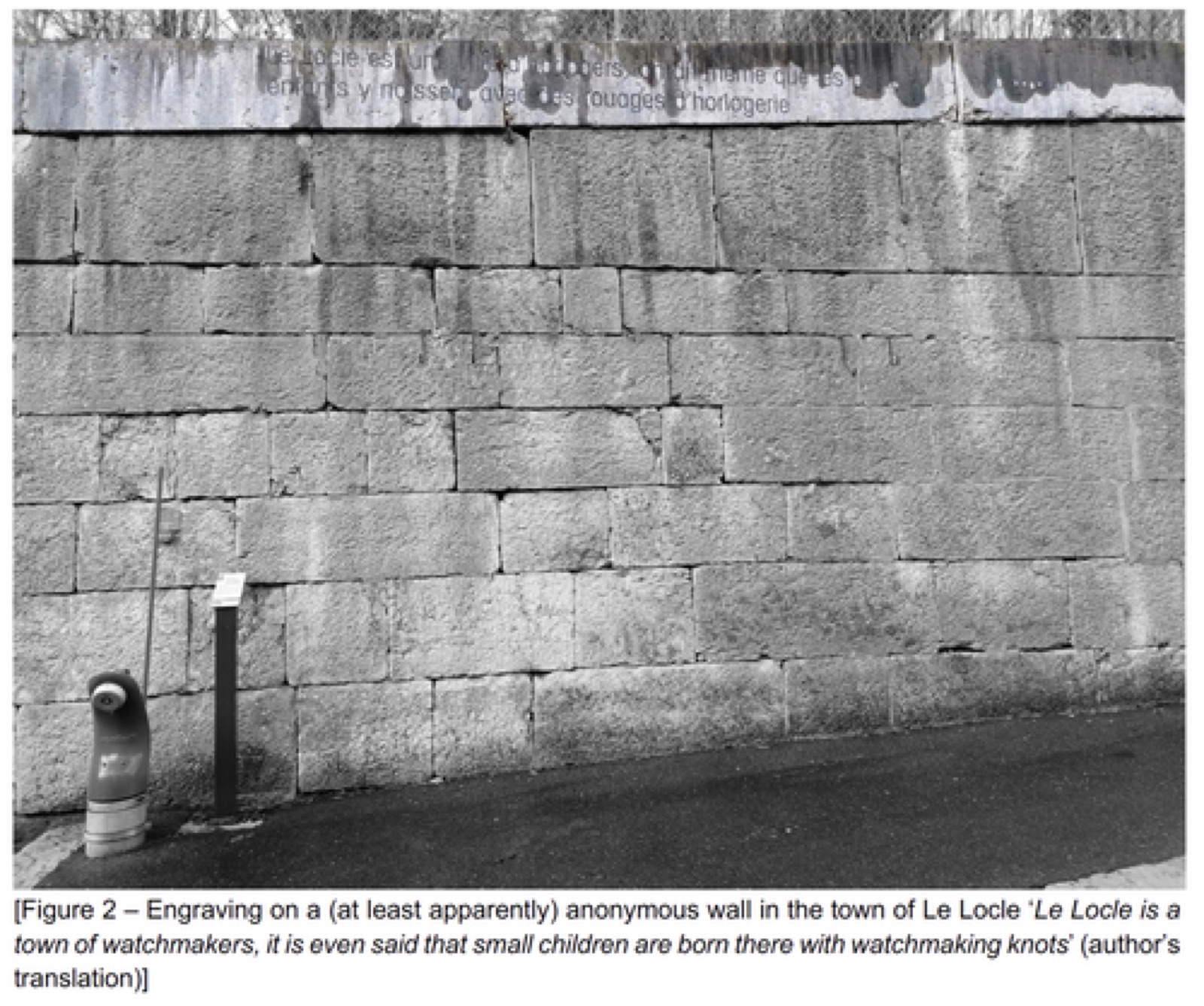
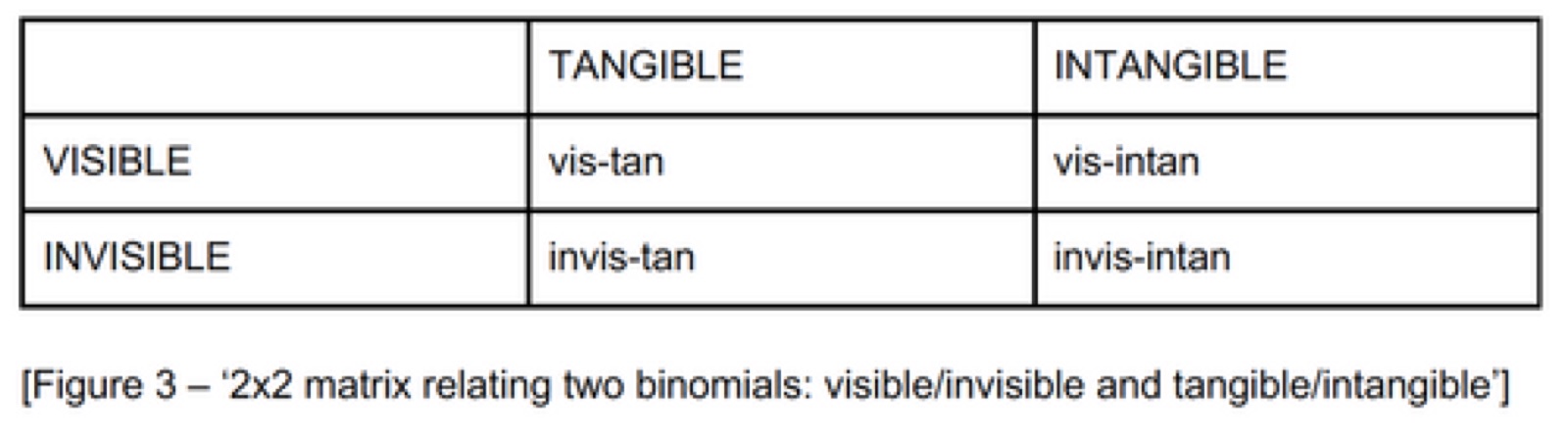
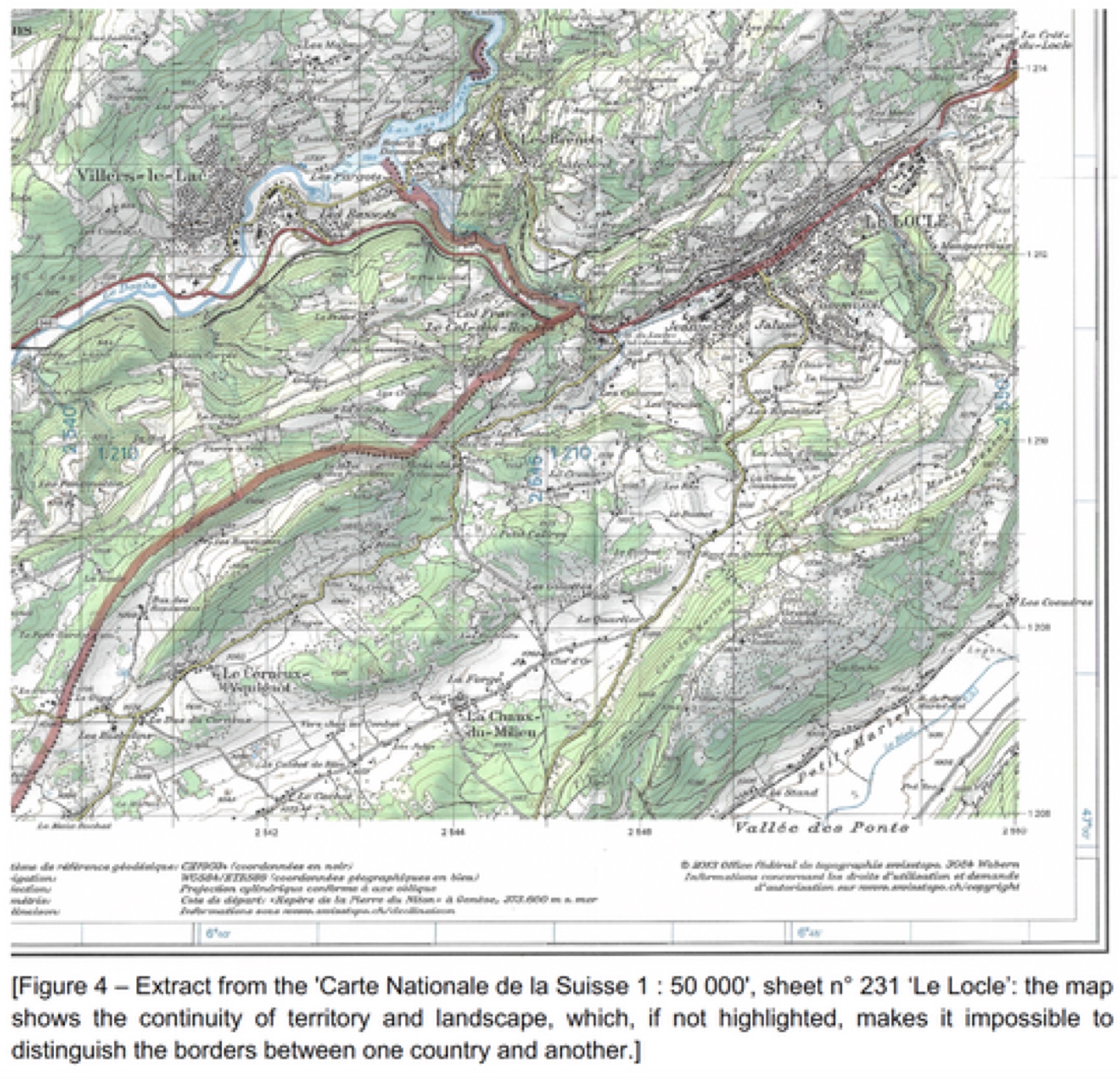
Faced with the complex urban and landscape fabric of La Chaux-de-Fonds / Le Locle, where geographical borders seem to creep in only sideways, subtly suggested by a few sporadic elements, disciplinary boundaries are blurred by the need to integrate experiences from different fields of study, for an understanding of such a rich composition, where each element seems to be both cause and consequence of the other. As Bernard Lassus already enunciated (Lassus, 1981), what perhaps concern, us the most - at least in Western Europe - is the relationship between the built and the site, which can only be found in an intermediate space between the parts. In this view, in contrast to Veschambre's argument (Veschambre, 2005), conservation - in all its declinations - should not be interpreted as the opposite of demolition, but as one of the many possible alternatives we have in front of any tangible or intangible asset at risk Indeed, I feel strongly constrained by the observation - as much in palpable realities as in words, texts, discourses - of a sharp tendency towards a dichotomous view between what is ‘heritage’ and what is not, as if there were nothing in-between.
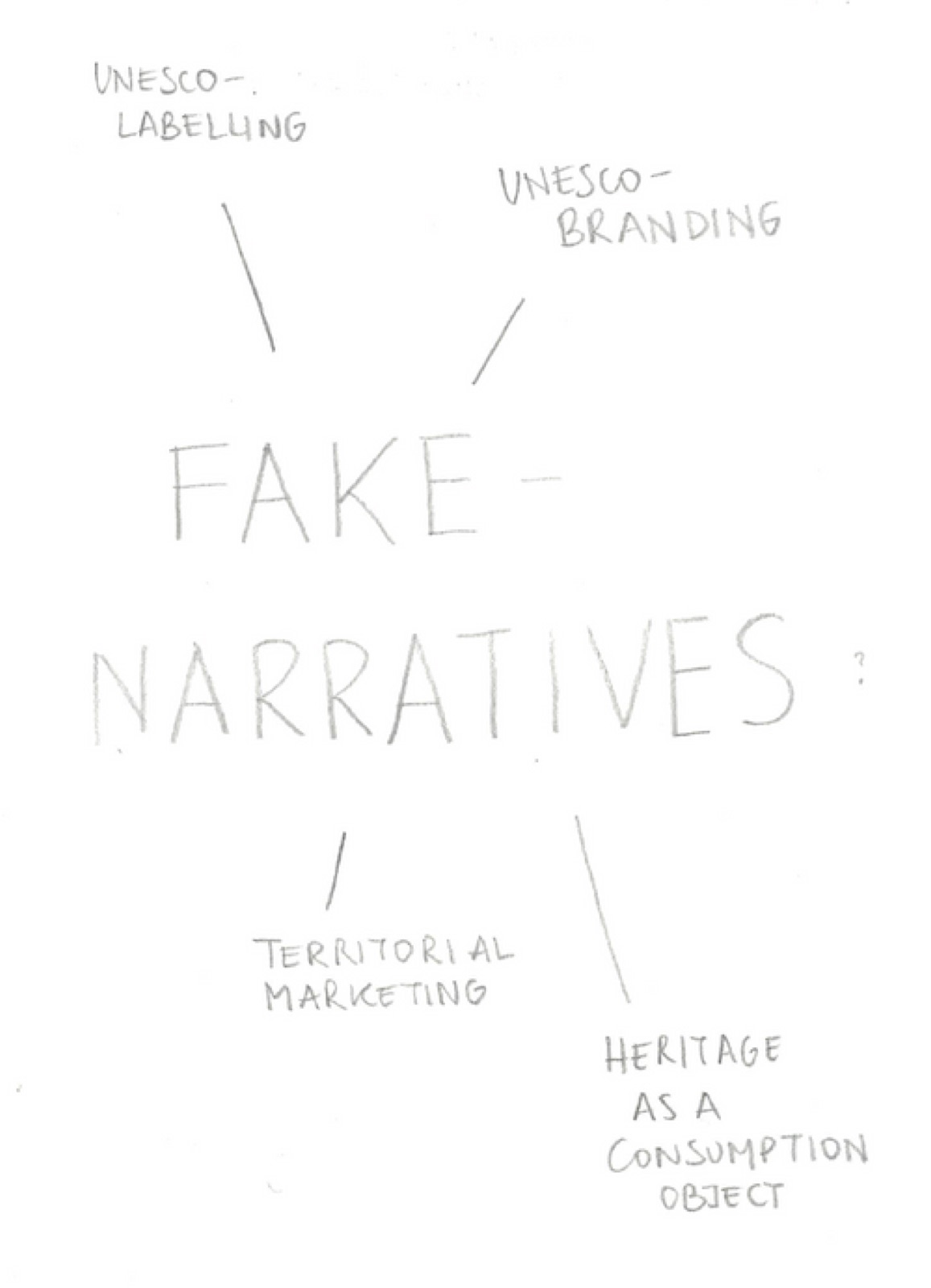
Therefore, for some years now, I have tried to avoid the term ‘heritage’, or ‘patrimony’, in my considerations, mainly for two reasons. The first is a form of distrust, developed over time, towards heritage practices, which I see, clearly not only myself, increasingly as 'capitalisation' practices. I identify with what Veschambre (Veschambre, 2005) writes, instinctively following this need to avoid - if not reject - that term which often seems to represent nothing more than a label. In this sense, the choice of the word ‘label’ refers precisely to the possibility of sticking, and so, attributing an exclusive name to no-matter-what architectural object, urban artefact or landscape transformation process, as long as a convincing narrative can be constructed aroun it. The second reason, more subtle though perhaps even more obvious, is related to a fear of mine, also shared with others, namely that of being labelled in my turn for having chosen to adopt the term 'heritage'. In fact, the attribution of some patrimonial value to a given artefact is often strongly connected with a constraint of immobilisation of the asset, linked with restoration and conservation practices, which diverge from the design approaches associated with recycling and regeneration in architecture, urbanism or landscape.