February 23–25, 2023 Le Locle & La Chaux-de-Fonds, Switzerland — 47.0999° N, 6.7928° E EDAR Course AR-669

Index / PhD Notes / PHD–07

Francesco Grasso

Urban Regeneration & Industrial Heritage

PHD–07 Politecnico di Torino Field Notes — Feb 2023

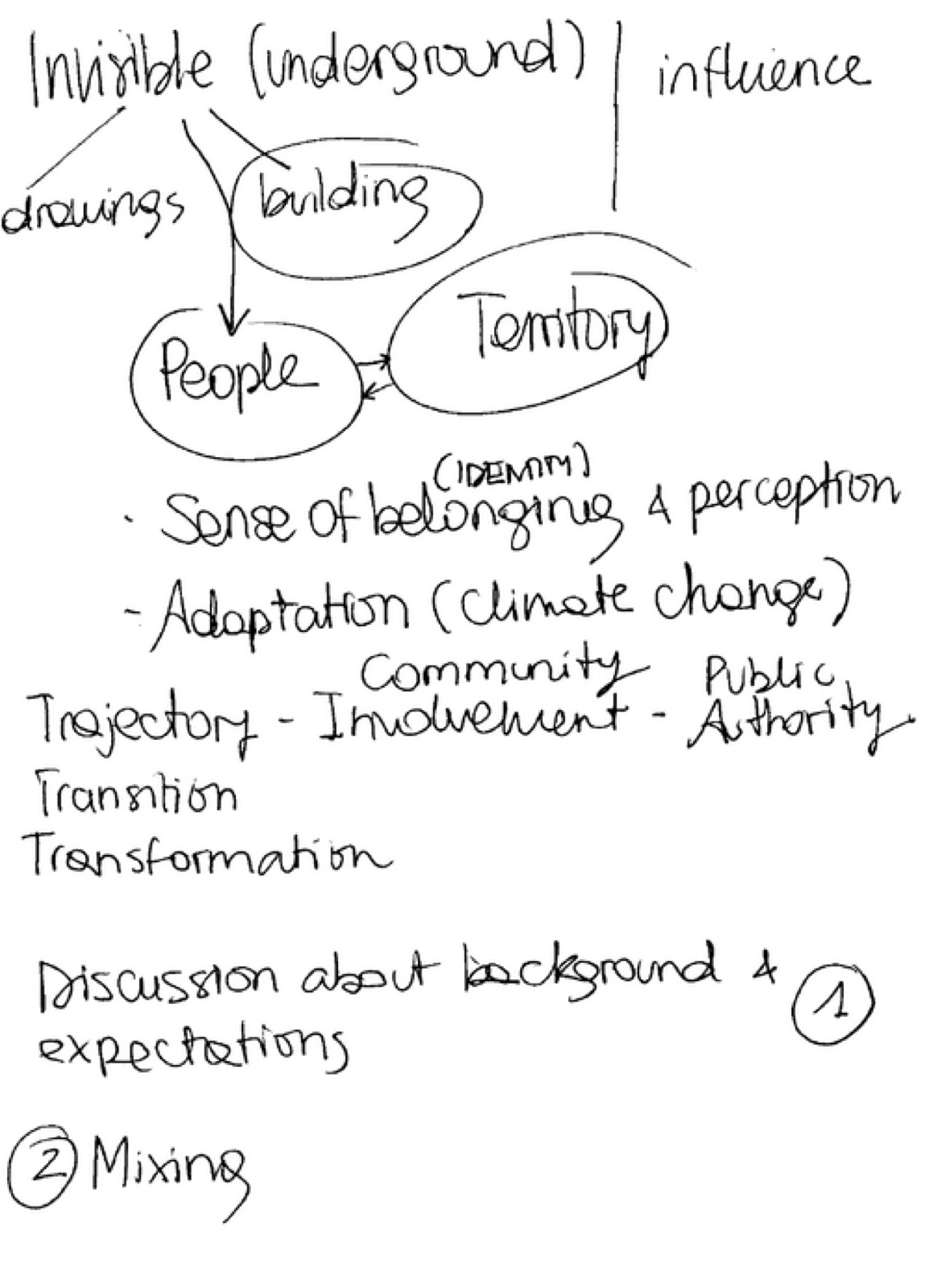
Determined to approach the fieldwork with a more articulated understanding of each other, we discussed our backgrounds as the first step in our group research. Not only did this initial exchange allow us to get to know each other and our expectations, but it breathed life into what would eventually become our methodology.

As our conversation proceeded, I listened and inquired about my groupmates’ diverse perspectives, letting them settle and take shape in my mind. After sharing my own academic experience, it was time to compose our research interests and try to develop a practical way forward.

Field notes by Francesco Grasso, plate 1
Plate 01 — field notebook, Francesco Grasso
Field notes by Francesco Grasso, plate 2
Plate 02 — field notebook, Francesco Grasso
§ 02

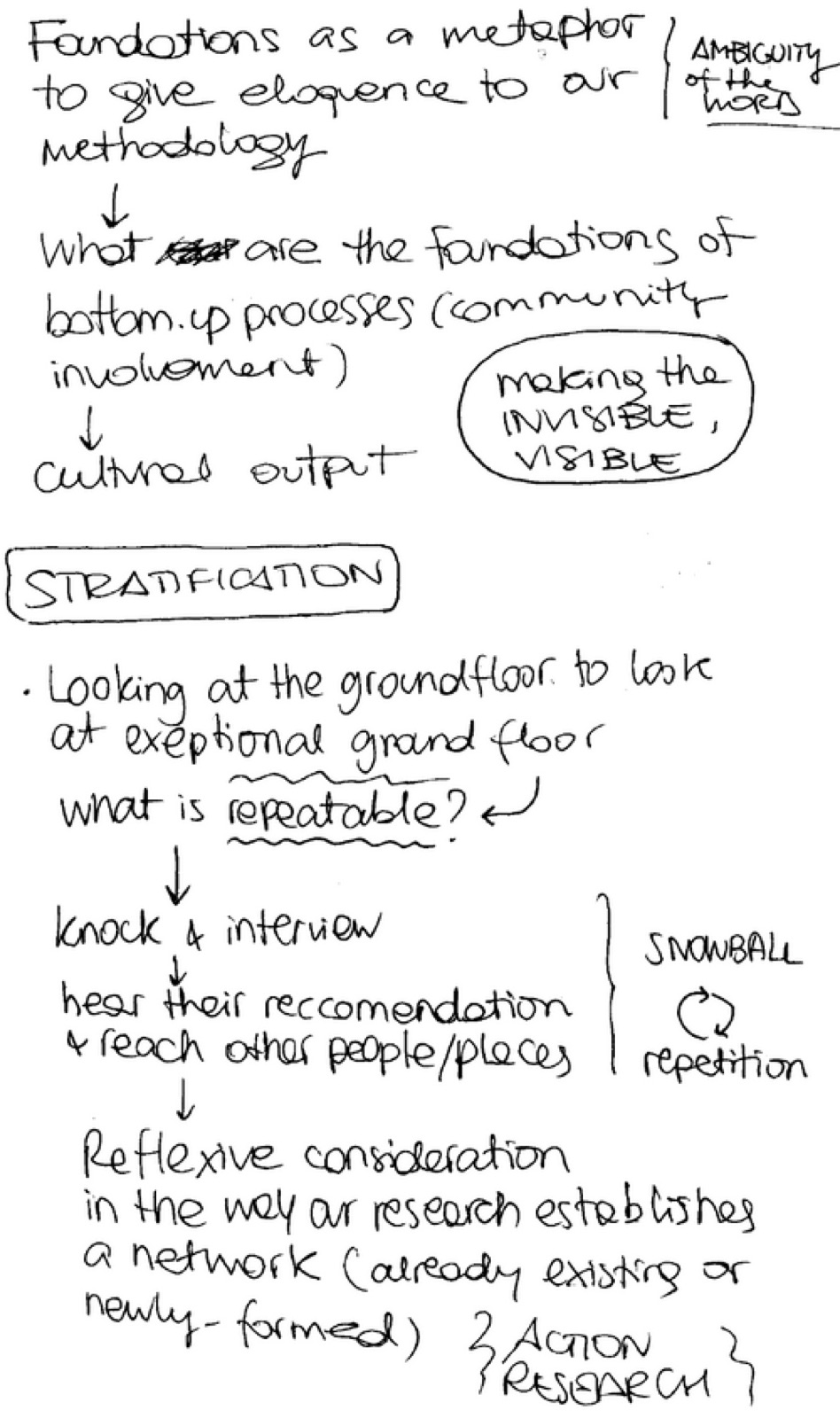
It progressively became evident how Gino’s focus on building foundations could offer an entry point for our reflection; although it initially meant looking for, observing and documenting the different solutions employed by modern-looking commercial activities in historic buildings to deal with slopes, this approach later took on a more expanded meaning. The ambiguous yet evocative character associated with the concept of foundations opened up a stimulating conversation around our intention to dig below the surface of Le Locle and La Chaux-de-Fonds and uncover narratives, experiences and aspects that lay underground.

The guiding metaphor of foundations provided solid ground on which to structure our work. Its memorability enabled us to «bring two separate domains into cognitive and emotional relation» (Black, 1962: 236-237) and coherently frame our technical analysis through a more qualitative point of view. In my eyes, the metaphor paved the way for qualitative research: it played the role that models do in quantitative analysis (Cardano, 2020).

The attention to invisible processes resonated with Marie, whose background as an elected official and interest in Urban Sociology placed people's involvement in transformations at the top of her list. Questions surrounding identity, sense of belonging, and the relationship between public authority and the community all figured prominently in her presentation.

She suggested employing qualitative interviews to try to unearth hidden dynamics that could lead us to the foundations ー in this case, the grassroots ー of citizens’ perceptions and participation. We agreed that speaking and listening to people could help deconstruct established narratives and reach unexpected conclusions.

The last piece of this methodological puzzle came from my recent exploration of the formation, endurance and disappearance of cultural and artistic networks in cities: to set the research in motion we could then rely on recommendations offered by interviewees, both in terms of places and people. I believed that our personal declination of a snowball sampling could represent an effective, yet simplified, way to advance our research and directly implicate ourselves in the definition of an invisible network; one that reflexively clarified both our agency and our subjects’.

Eventually, we let ourselves «be drawn by the attractions of the terrain and the encounters» (Debord, 1958), ending up unconsciously embracing a sort of dérive . This combination of stimuli, initial uncertainty and curiosity led us to walk into Sabrina Simon-Vermont’s art lab for children in Le Locle, “Atelier Les Confettis”.

§ 03

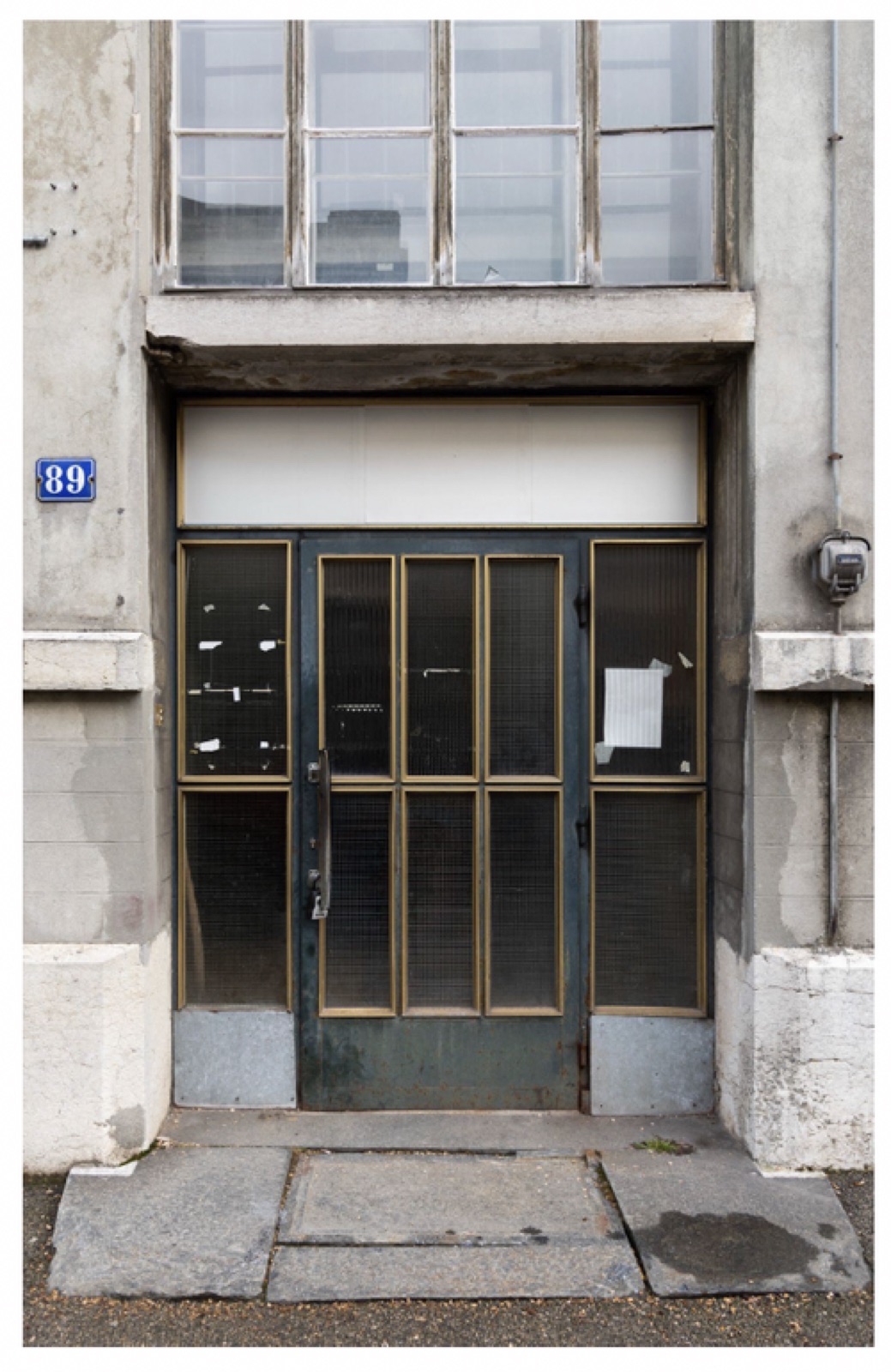
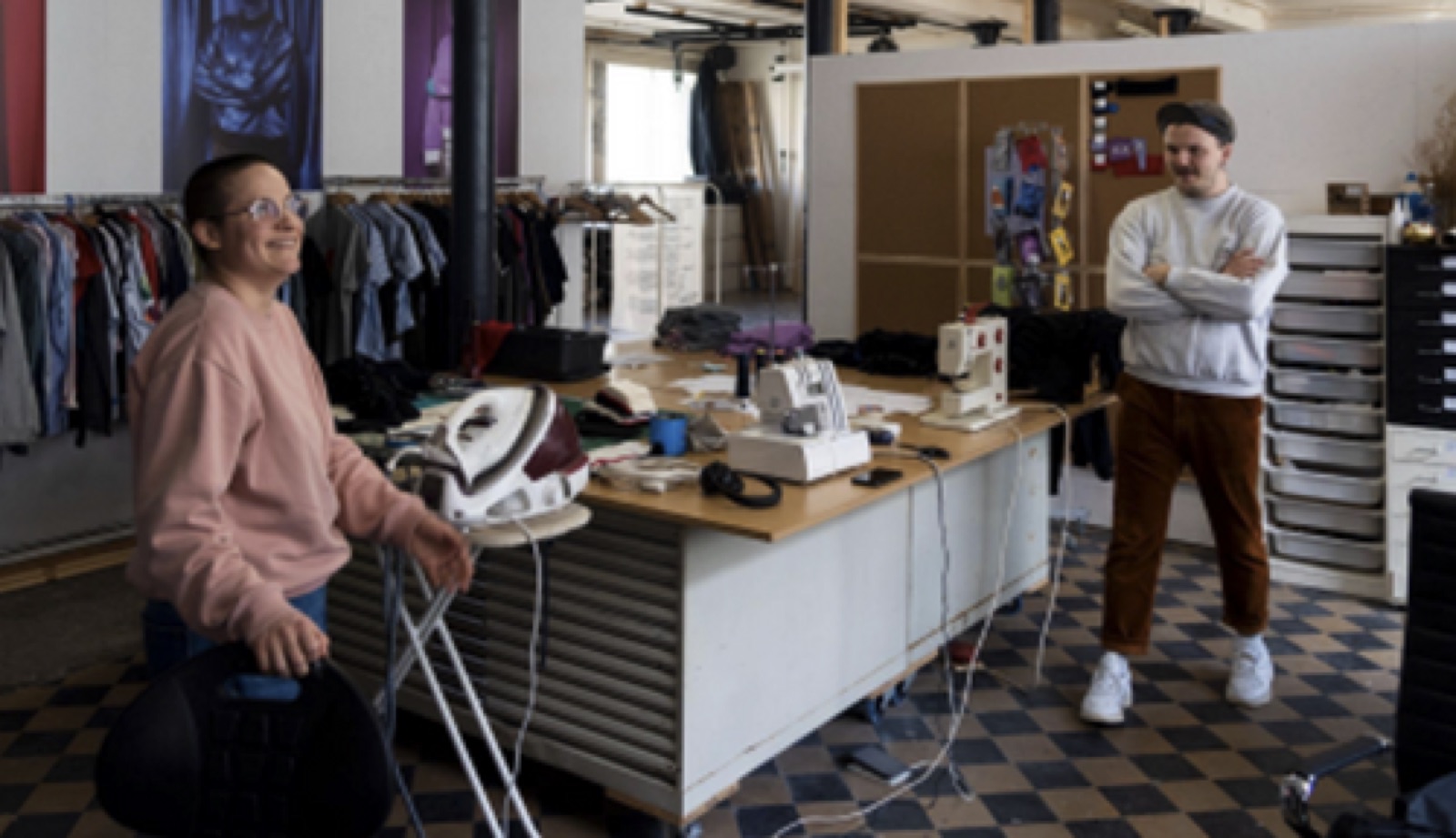
Hungry and trapped in the rigid urbanistic scheme of La Chaux-de-Fonds, we decided to opt for a quick takeaway lunch: that was only until we realised we were in close proximity to the Creative Studio “X Personnes”, a place that had caught Marie’s attention online. We were puzzled because we couldn’t find any sign or indication of their presence at Rue de la Serre 89, the address listed on their official Instagram profile. We decided to pull the entrance door to the building: it was unlocked and we interpreted it as a sign! We proceeded upstairs and found their doorbell: we were suddenly inside the studio speaking with Salomé Guyot, a graphic designer, and Célien Favre, a stylist.

After clearing up why we showed up unannounced at their door, we introduced our research and started asking them about their experience in La Chuaux-de-Fonds.

Before understanding the composition of their group, our first line of questions concerned the physical composition of the building itself. The studio was indeed established in a former watchmaking facility and mostly preserved its original features, such as large windows and a big open space interrupted by slim columns. My gaze immediately turned to the makeshift walls which offered a practical, cheap and reversible way to separate the various spaces. This configuration took me back to the analysis I had developed for my Master’s thesis when I explored the issues connected to the transformation of industrial heritage sites into the workplace for the cultural and creative class.

Field notes by Francesco Grasso, section 03, plate 1
§ 03 · Plate 01 — Francesco Grasso
Field notes by Francesco Grasso, section 03, plate 2
§ 03 · Plate 02 — Francesco Grasso
§ 04

It was extremely insightful to listen to and take notes of the different answers Salomé and Célien were providing to our thematically diverse yet interlinked sets of questions.

In line with my current research interests, I was curious to understand the journey of the associations behind this place and their institutional relationships. It turned out that in 2006 a group of eight people had established a creative space in a former dormitory for railway workers located near the Grand Pont in La Chaux-de-Fonds. La Locomotive ー the name the association still bears today ー provided a building for up to ten ateliers working with photography, stop-motion video, music, painting, tech, graphic design and engraving. In June 2019, they were forced to leave the premises and move to a different location: Rue de la Serre 89.

Today, La Locomotive , which was never dissolved but just changed its registered office, manages the space and rents it to artisans and artists, while La Serre , an association formed after the eviction, deals with promoting and organising events and exhibitions at X Personnes. The two associations work hand-in-hand to ensure people can comfortably work there and display their creations to the public.

To remain free and independent, both associations have never asked for funds from the municipality; the city, in return, has never made significant investments in the field nor promoted La Locomotive/La Serre’s cultural programme. The latter has partially to do with the fact that the building is still classified as a “productive” and “insustrial” space, meaning it lacks the proper conditions to be able to regularly host events in compliance with safety regulations. As a result, they’re allowed to organize occasional shows throughout the year under special circumstances.

As I was inquiring about the conflicts between local institutions, mainstream and independent artistic production, I asked about XPersonnes’s involvement in the 74th Biennale d’Art Contemporain held at the Musée des Beaux-arts de La Chaux-de-Fonds in 2021. Their answer not only perfectly aligned with my research but also pointed us toward our third and final stop of the day.

Since the director of the Musée des Beaux-arts is also responsible for the cultural agenda of the city, the institutional implications were amplified. This did not stop a record number of artists to apply: out of more than 200, 39 were selected for the final exhibition (Romanens, 2021). The relevance of this example, though, lay in the “ Salon des refusés” organized by an association composed of several artists who were not selected by the jury. Described as a «contre-évènement» by one of its members (Romanens, 2021), it gathered more than 140 works by around sixty artists to Quartier General (QC), a former slaughterhouse turned into an exhibition space.
§ 05

The ambivalent dynamic between an institutionally recognized and financed art event and its bottom-up spin-off alternative resonated with me, especially because I’m gathering information about the relationship between Artissima (the leading contemporary art fair in Italy held annually in Turin) and the “off” circuit of initiatives part of the Contemporary Art Torino Piemonte calendar. The fact that a (not necessarily) critical juxtaposition to the institutionalised, closed and opaque system of contemporary art took place in a former industrial site struck a chord as well.

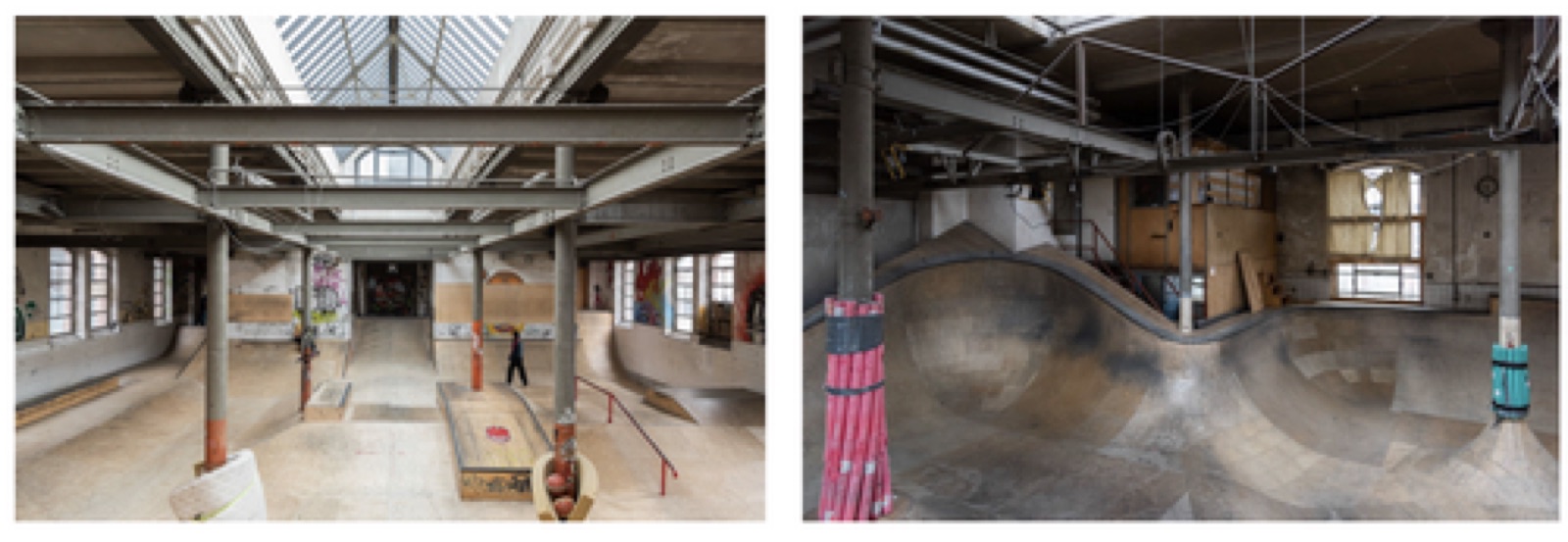
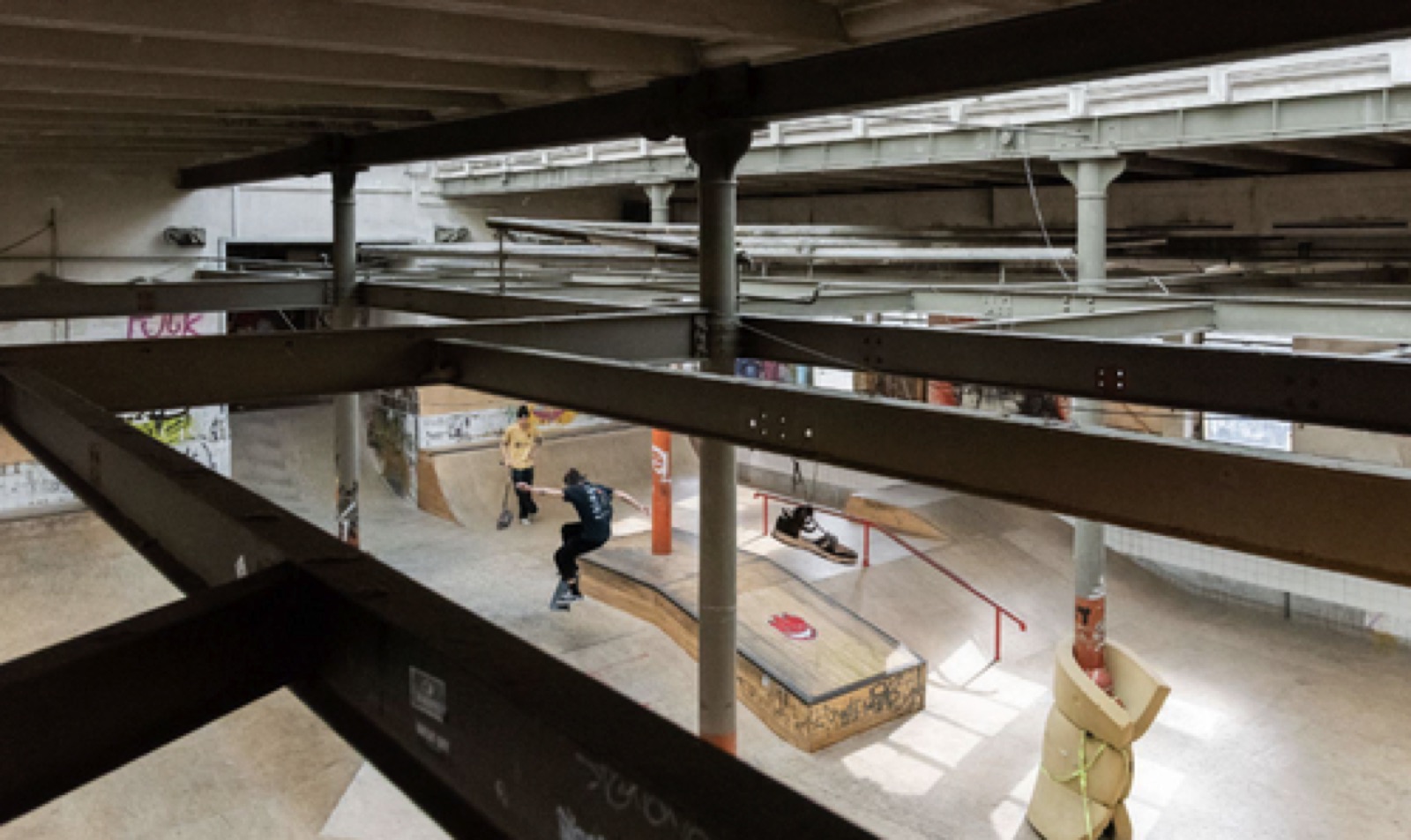
At that point, we couldn’t abstain from checking out Quartier Général , which figured prominently in the list of must-see places I had compiled before the course. Although the main aisle was closed, we managed to access two separate areas that belonged to the Anciens Abattoirs complex. With little preparation, we were surrounded by the pool-shaped curves of the two skateparks run by Park N’ Sun.

Over its twenty-year history, the association has managed, maintained and improved the structures, which remain the only indoor skateparks in the entire Neuchâtel canton. Before entering them, the only clues we had were a banner and the persistence of rolling, metallic sounds, we were then overwhelmed by this unexpected and suggestive wooden landscape contained in an industrial body.

Both the location and the fact that some members of the associations were taking pictures and videos of people skating, motivated me to document what was happening in a much more visual sense. Hence, this final stop in our fieldwork is not recorded in my journal but in my camera. I mostly strove for composition and timing to produce an adequate representation of what I was perceiving.

In the end, the most challenging aspects had to do with language barriers: had we not been able to rely on Marie, it would have been close to impossible to access places, credibly introduce ourselves and meaningfully interact with participants. She was the one who went and talked to a group of young people we had previously ignored when we first arrived at QC. While Gino and I were convinced the whole complex was closed, she was actually procuring us access to the skatepark, highlighting this mixture of casual encounters, determination, curiosity, and instinctive attraction that guided us throughout our dérive .

Field notes by Francesco Grasso, section 05, plate 1
§ 05 · Plate 01 — Francesco Grasso
Field notes by Francesco Grasso, section 05, plate 2
§ 05 · Plate 02 — Francesco Grasso