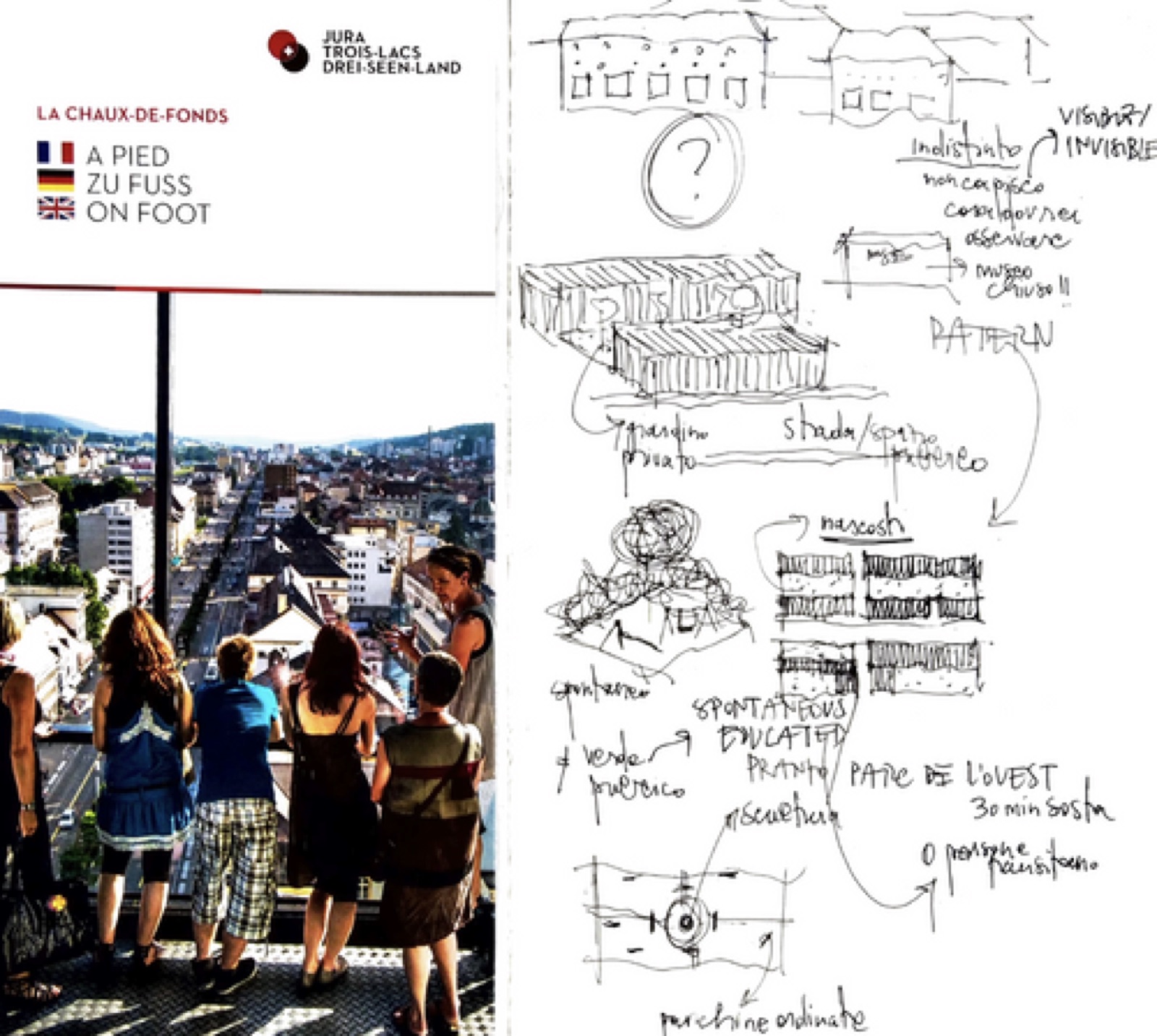
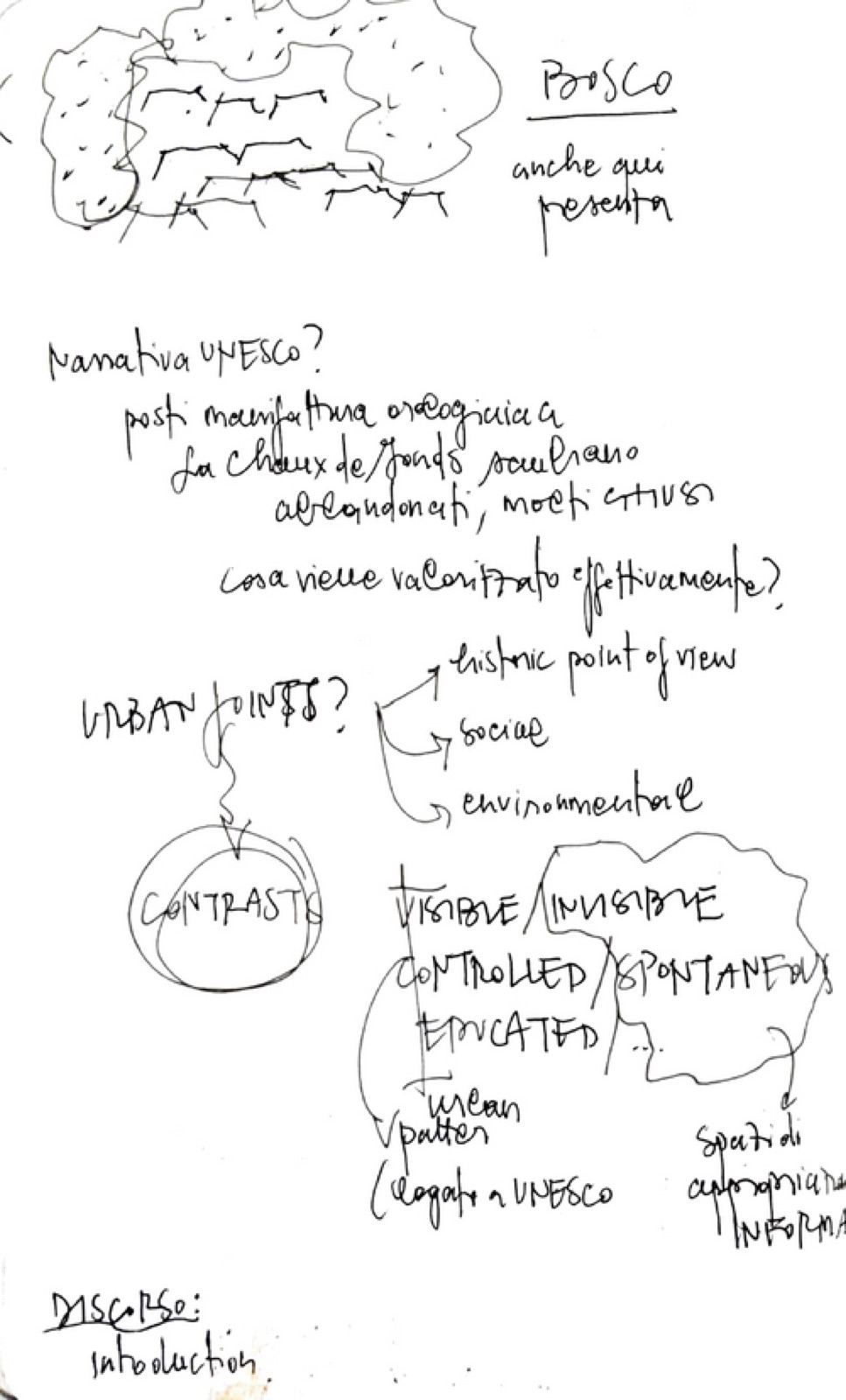
The same characteristics are also found when observing the vegetal component. At first glance, one would not say that La Chaux de Fonds is a “green” city: there is only one of the green spaces proposed by the predefined tour (Parc de l'Ouest), the rest are grass carpets in front of the houses. What they have in common is perfect control through architectural design and careful selection of plant species. Again, what is visible is orderly and educated.
Meanwhile, there is an invisible biodiversity or, in any case, a biodiversity ignored by narratives which has a unique character given by its spontaneity and wildness: natural life explodes uncontrolled within private gardens and, above all, in the forest surrounding the urban agglomeration. The dichotomy between controlled and spontaneous is tangible, particularly at the boundary between city and forest, a point where there is no mediation, no dispersion: it is an aut aut.
Personal considerations linked with my PhD research: the UNESCO candidacy’s issues At the end of this experience, it is therefore questionable whether the construction of the UNESCO dossier and the narratives related to the watchmaking industry have not overshadowed some other important aspects of the city. Through a flat storytelling, the process of patrimonialisation of the city seems to have made visible only specific urban characteristics – linked to an idea of order and control – thus leaving invisible the historical, cultural and architectural richness of which the city is the embodiment. These considerations are also crucial for the construction of my doctoral research.
Although my investigation is more related to the history of architecture in the Olivetti world and the technical experiments in the building design process, the aim I have set myself is not to limit my investigation to architectural aspects but to expand the reflections to a wider panorama. The intention is also to take into account social and cultural aspects, labour issues and the corporate culture of the time: these are fundamental factors in the construction of the Olivetti company identity, as well as in La Chaux de Fonds.
The UNESCO candidacy, in both cases, has allowed them to transform their industrial and manufacturing sites into a cultural resource with two very different outcomes, as the urban and architectural nature of the two centres under consideration is very different.
On the one hand, huge buildings signed by important 20th century Italian architects, on the other, a silent and fragmented tradition within the urban structure.
Being able to come into contact, thanks to this experience, with an industrial heritage so different from my case study has been an opportunity to broaden my perspective on the issues of management and valorisation of architectures whose recognition has taken place over the last years. The reflections that emerged within the seminar leave open questions - which are transversal between La Chaux de Fonds and my specific research - that focus on the theme of the creation of narratives and the possibility of transferring production culture and technical knowledge without flattening the multiplicity of aspects that characterise the two case studies